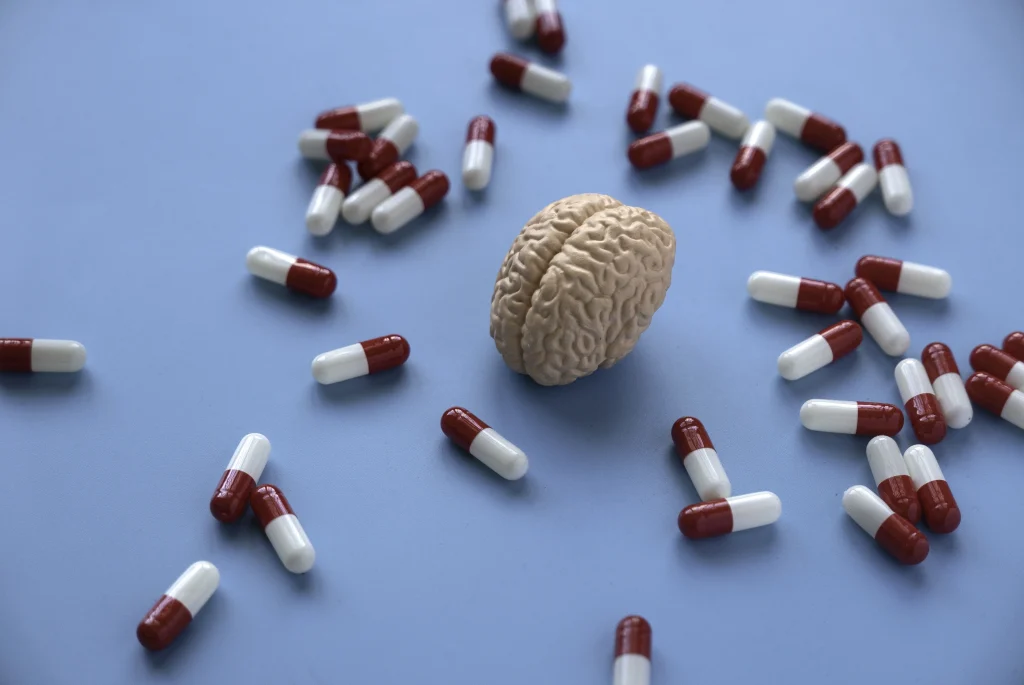
For decades, ADHD has been popularly described as a “dopamine deficiency disorder.” You’ve probably heard it: “ADHD brains don’t have enough dopamine, so medication tops it up.”
It’s simple. It’s wrong. And it’s making ADHD harder to understand.
Groundbreaking research published in January 2026 in Nature makes this explicit: ADHD is linked to how dopamine is regulated and used in the brain, rather than a simple deficiency.
This isn’t semantic nitpicking. The difference between deficiency and dysregulation changes everything about how we understand ADHD, why medication works, and why willpower doesn’t fix it.
Let me explain what’s actually happening in your synapses.
The “Low Dopamine” Myth (And Why It Stuck)
The dopamine deficiency hypothesis emerged from early observations: ADHD medication increases dopamine availability, and symptoms improve. Logical conclusion: ADHD must mean low dopamine.
But neuroscience is never that simple.
A comprehensive review published in October 2024 in Frontiers in Psychiatry searched the entire research literature and found 2,990 studies on dopamine and ADHD, including 39 meta-analyses. The conclusion: there’s no clear consensus on what the dopamine hypothesis specifically refers to.
Some researchers claim hypo-functioning dopamine systems. Others suggest hypo-dopaminergic states in specific brain regions like the prefrontal cortex. Still others propose lowered extracellular dopamine concentration.
The problem: none of these precisely describe what’s actually happening.
September 2025 research reviewing human and animal studies found something crucial: evidence for hypodopaminergic signalling (low dopamine) is not consistently observed in diverse ADHD patient cohorts.
Some ADHD brains show reduced dopamine transporter availability. Others show increased dopamine transporter binding. Some demonstrate lower dopamine receptor density. Others don’t.
Translation: if ADHD were simply “low dopamine,” we’d see consistent reductions across all ADHD brains. We don’t. We see dysregulation – systems that don’t work properly regardless of whether levels are technically “high” or “low.”
What Dysregulation Actually Means
Dysregulation means the dopamine system isn’t functioning optimally, even when dopamine levels might appear normal or even elevated in some regions.
Think of it like a thermostat malfunction. The problem isn’t necessarily that the room is always too cold (deficiency). The problem is that the temperature regulation system is broken – sometimes too hot, sometimes too cold, never stable.
Here’s what dysregulation looks like at the synaptic level:
Dopamine Transporters Are Dysregulated
Dopamine transporters (DAT) are proteins that sweep dopamine away from synapses after neurotransmission, recycling it back into neurons for future use.
In ADHD, these transporters don’t function properly.
Research from 2025 found conflicting patterns:
Some ADHD children show reduced dopamine transporter availability
Other ADHD adults show greater dopamine transporter binding in nucleus accumbens, midbrain, and left caudate
The same ADHD patients showing increased transporter activity in some regions showed reduced availability in those exact same regions
This isn’t deficiency. This is dysregulation – the system is malfunctioning, creating inconsistent, unpredictable dopamine clearance from synapses.
Result: dopamine signalling becomes unreliable. Sometimes synapses have too little dopamine (rapid clearance). Sometimes they have too much (impaired clearance). But it’s never optimally regulated.
Dopamine Receptors Are Dysregulated
Dopamine receptors on neurons receive dopamine signals. There are five subtypes (D1-D5), classified as D1-like (D1, D5) or D2-like (D2, D3, D4).
D1-like receptors are stimulatory – they increase neural activity. D2-like receptors are inhibitory – they decrease activity. This balance is essential for proper brain function.
ADHD research shows dysregulation across receptor systems:
Reduced D2/D3 receptor availability in reward centres (nucleus accumbens, midbrain)
Altered D4 receptor function affecting attention and impulse control
Genetic variations in D5 receptors associated with ADHD symptoms
Again, this isn’t consistent deficiency. Different ADHD individuals show different receptor patterns. The commonality is dysregulation – receptors aren’t responding appropriately to dopamine signals.
April 2026 research on neurotransmitter balance explains that both excessive and insufficient neurotransmitter levels affect executive function, procrastination, and motivation. ADHD exists in a state of imbalance, not consistent deficit.
Dopamine Release and Reuptake Are Dysregulated
Normal dopamine function works like this:
Neuron releases dopamine into synapse
Dopamine binds to receptors on adjacent neuron
Signal transmitted
Transporters reabsorb dopamine
System ready for next signal
In ADHD, every step of this process can be dysregulated:
Release may be insufficient for unstimulating tasks but excessive for novel ones
Receptor binding is compromised by reduced receptor availability
Signal transmission is unpredictable
Reuptake is too fast, too slow, or inconsistent
System never reaches optimal baseline
September 2025 comprehensive research on ADHD mechanisms confirms: dopamine production starts early during embryonic brain development, and dopamine exerts functions at critical periods. Dysregulation during development affects how the entire system matures.
This explains why ADHD isn’t something you develop in adulthood or can “cure” through behaviour change. The regulatory mechanisms were never properly calibrated from the start.
How This Explains ADHD Symptoms Better Than “Low Dopamine”
The dysregulation model explains paradoxes that deficiency models can’t.
Why Stimulants Don’t Make ADHD Worse
If ADHD were simply low dopamine, adding more dopamine should help consistently. But if you give stimulants to someone without ADHD, they don’t develop better focus – they get jittery, anxious, and overstimulated.
Why do stimulants help ADHD but harm neurotypical people?
Because ADHD involves dysregulation, not deficiency.
Stimulants block dopamine transporters, allowing dopamine to accumulate in synapses. For dysregulated ADHD systems where transporters are overactive or unpredictable, this stabilises function.
For neurotypical systems already functioning optimally, blocking transporters creates too much synaptic dopamine, pushing the system out of optimal range.
Research from 2025 explains both dopamine and norepinephrine work on an “inverted U” curve – too little impairs function, optimal levels enable function, too much impairs function again.
ADHD brains exist below or inconsistently around optimal levels. Medication raises and stabilises them into functional range. Neurotypical brains are already optimal. Medication pushes them past optimal into dysfunction.
Why ADHD Presents Differently Across Individuals
If ADHD were simple dopamine deficiency, everyone with ADHD would present similarly. They don’t.
Some people have primarily inattentive symptoms. Others are hyperactive-impulsive. Many are combined presentation. Some respond to low medication doses. Others need high doses. Some respond better to methylphenidate. Others to amphetamines.
Dysregulation explains this variability.
Different individuals have different patterns of:
Dopamine transporter density and function
Receptor availability and sensitivity
Genetic variants affecting dopamine synthesis, transport, and metabolism
Developmental timing of dopamine pathway formation
Research confirms ADHD is heterogeneous (varied) at the neurological level. There isn’t one ADHD brain. There are many dysregulation patterns producing similar symptoms through different mechanisms.
The deficiency model can’t account for this. Dysregulation can.
Why Interest and Novelty Override ADHD Symptoms
This is the big one that deficiency models completely fail to explain.
If you have consistently low dopamine, interesting tasks should be just as difficult as boring ones. You’d be uniformly unmotivated.
But ADHD reality: you can’t start boring tasks to save your life, yet you hyperfocus on interesting activities for eight hours straight.
Dysregulation explains this perfectly.
Novel, interesting, challenging, or urgent tasks trigger stronger dopamine release. For dysregulated systems, this surge temporarily overcomes the dysfunction:
Overactive transporters can’t clear dopamine fast enough when release is massive
Reduced receptors get activated when signal strength is high
Reward processing works when rewards are immediate and compelling
Boring tasks don’t trigger this compensatory surge. The dysregulated baseline remains dysfunctional, making task initiation impossible.
Research from 2025 on novelty processing shows ADHD brains have heightened novelty “bonus” signals associated with phasic dopaminergic activity in reward pathways. Your brain literally responds more strongly to novel stimuli than neurotypical brains.
This isn’t “choosing” interesting over boring. It’s dysregulated systems that only function properly under high-stimulation conditions.
The Neurobiological Reality of ADHD
Let’s get specific about what dysregulation means structurally and functionally.
Prefrontal Cortex Dysfunction
The prefrontal cortex (PFC) handles executive functions: planning, organisation, impulse control, task initiation, working memory.
ADHD research shows the PFC develops more slowly in ADHD children and functions differently in adults. But it’s not simply “smaller” or “less active.”
It’s dysregulated.
Early 2000s research showed stimulants trigger dopamine and norepinephrine release in the frontal cortex. These neurotransmitters modulate PFC function, supporting cognitive control and goal-directed behaviour.
When dopamine regulation is optimal, the PFC works well. When dysregulated (too high, too low, or unstable), executive functions fail.
ADHD involves chronic PFC dysregulation due to inconsistent dopaminergic input from subcortical regions.
Reward Circuitry Alterations
The mesolimbic dopamine pathway runs from the ventral tegmental area (VTA) through the nucleus accumbens to the prefrontal cortex. This circuit processes reward, motivation, and reinforcement learning.
Multiple 2025 studies confirm ADHD involves alterations throughout this pathway:
Reduced D2/D3 receptor availability in nucleus accumbens and midbrain
Inconsistent dopamine transporter density
Altered reward prediction error signals
Compromised reinforcement learning
These aren’t uniform reductions. They’re dysregulated patterns where reward processing is unpredictable.
Research specifically notes: the same ADHD patients showing increased dopamine transporter activity in nucleus accumbens and midbrain (correlated with higher motivation) also showed reduced transporter availability in those exact regions.
How can you have both increased and reduced availability simultaneously? Dysregulation. The system isn’t functioning coherently.
Striatal Dysfunction
The striatum (including caudate and putamen) is essential for motor control, habit formation, and reward processing.
ADHD involves altered striatal functioning particularly affecting the direct pathway from striatum to substantia nigra. This pathway uses D1 receptors to facilitate movement and goal-directed action.
Research from 2025 shows dopamine modulates cortico-striatal synapses, regulating neuroplasticity (brain’s ability to form new connections and strengthen existing ones).
When dopamine regulation is disrupted, synaptic plasticity is compromised. This affects:
Learning from rewards and consequences
Forming productive habits
Initiating goal-directed behaviour
Regulating motor activity
Again, not deficiency but dysregulation – the system can’t adapt and optimise itself properly.
Developmental Impact
Critical finding from 2025 research: dopamine production starts early during embryonic brain development, even before synapses form. Dopamine exerts functions at critical developmental periods.
ADHD isn’t something that appears suddenly. It reflects developmental dysregulation affecting how dopamine pathways mature and connect.
Studies show ADHD-associated genetic variants affect:
Synaptic formation and maintenance
Neurotransmitter receptor expression during development
Neuroplasticity and synaptic potentiation
Brain volume and cortical thickness
The dysregulation is baked in from development. This is why ADHD persists lifelong and why behavioural interventions alone can’t “cure” it. You can’t rewire a fundamentally dysregulated system through effort.
Why Understanding Dysregulation Matters
This isn’t academic hair-splitting. The dysregulation model changes everything.
It Removes Shame
“Low dopamine” implies you’re running on empty, broken, deficient.
“Dysregulated dopamine” means your system works differently, requiring different inputs to function optimally.
One frame says you’re less than. The other says you’re wired differently.
Research validates this. You’re not lazy, undisciplined, or unmotivated. Your dopamine regulatory mechanisms genuinely don’t work the way neurotypical systems do.
That’s neurological difference, not personal failing.
It Explains Why Medication Isn’t “Cheating”
If ADHD were deficiency, medication would be “giving you more than others have.” Unfair advantage.
But ADHD is dysregulation. Medication corrects malfunctioning regulatory mechanisms to bring you closer to neurotypical baseline function.
Stimulants don’t give ADHD brains superhuman focus. They enable normal focus by stabilising dysregulated dopamine signalling.
Some people need methylphenidate. Others need amphetamines. Some respond to low doses. Others require high doses. Some need non-stimulants targeting norepinephrine or serotonin systems.
The deficiency model can’t explain this. If everyone just needed “more dopamine,” one medication at standard dose should work for everyone.
Dysregulation explains why finding the right medication is trial and error matching your specific regulatory pattern to appropriate pharmaceutical intervention.
It Points Toward Appropriate Support
Understanding dysregulation clarifies what helps:
Medication: Corrects synaptic dopamine regulation Coaching: Develops external strategies compensating for internal dysregulation Accommodations: Create environments that work with your regulatory patterns rather than against them Understanding: Removes shame and enables self-compassion
ADHD isn’t moral failing. It’s neurological dysregulation requiring appropriate support.
When Professional Assessment and Support Help
If you recognise ADHD patterns:
Interest-based functioning (hyperfocus on engaging tasks, paralysis on boring ones)
Executive function difficulties (planning, organisation, task initiation)
Your brain doesn’t consistently lack dopamine. It fails to regulate dopamine properly – sometimes too much, sometimes too little, never optimal, always unpredictable.
Research from 2026 makes this explicit. ADHD involves dysregulated dopamine transporters, inconsistent receptor availability, altered reward processing, and developmental differences in how dopamine pathways formed.
This isn’t semantic distinction. It’s fundamental to understanding:
Why you struggle with tasks others find easy
Why medication helps rather than “making you high”
Why you need appropriate support rather than shame
You’re not broken. Your dopamine regulatory mechanisms work differently.
With proper understanding, medication, coaching, and accommodations, dysregulated systems can function well.
Your brain just needs what it needs.
Medical Disclaimer: This article provides educational information about ADHD and dopamine dysregulation. It is not medical advice and does not replace professional assessment, diagnosis, or treatment. For ADHD assessment in the UK, speak with your GP about NHS referral or consider private assessment options. Medication information is educational only – discuss treatment options with qualified healthcare providers.
Access to Work Information: Access to Work is a UK government scheme providing funding for workplace adjustments. Eligibility and funding amounts vary based on individual circumstances. Visit gov.uk/access-to-work for current information or contact the Access to Work helpline.
For decades, ADHD has been popularly described as a “dopamine deficiency disorder.” You’ve probably heard it: “ADHD brains don’t have enough dopamine, so medication tops it up.” It’s simple. It’s
You need to file your taxes. The paperwork sits on your desk, untouched for weeks. You want to do it. You know you should do it. You’re stressed about not
The restaurant is loud. Fluorescent lights hum overhead. Someone’s perfume hits you like a wall. Your brain screams at you to leave but everyone else seems fine, chatting and laughing
Reading Time: 8 minutes You finish a meeting and your brain feels like static. Someone asks if you’re free for coffee. Your chest tightens. You know you should say “I’m