Always Late No Matter What I Do – ADHD Time Blindness Explained
You set three alarms. You laid your clothes out the night before. You told yourself you’d leave ten minutes early. And you still arrived late. Again. If that loop is
You know something’s wrong. You’ve known for years.
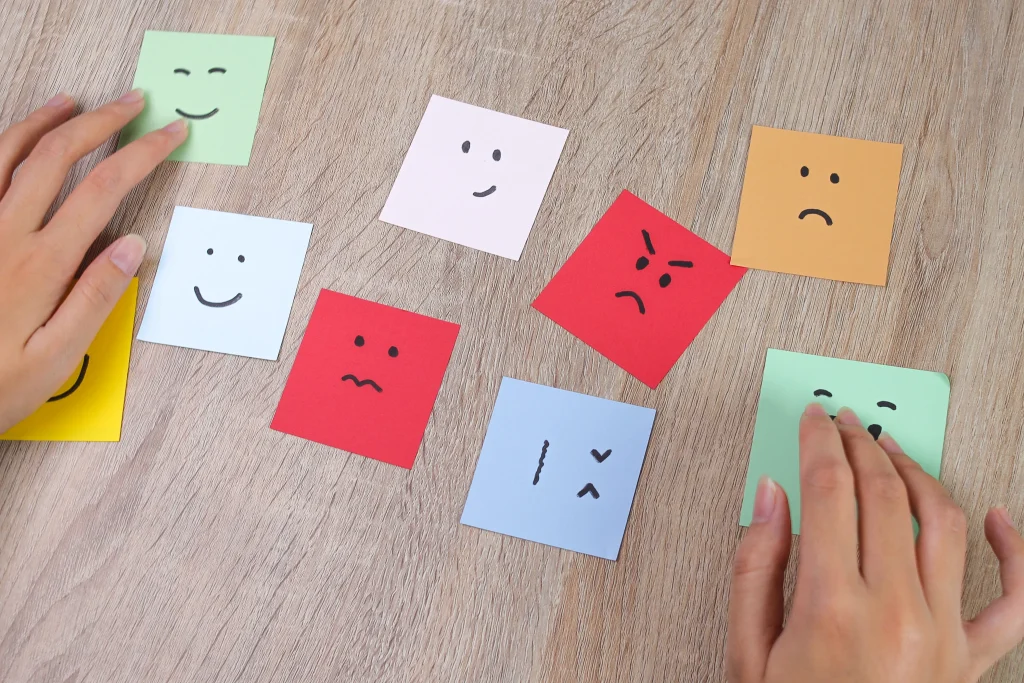
People ask “how do you feel about that?” and your mind goes blank. Not because you’re avoiding the question. Because you genuinely don’t know.
Therapists have told you to “sit with your feelings” but you don’t know what you’re supposed to be sitting with. There’s… something. A vague sensation in your chest or stomach. But what it is? No idea.
Your partner says “you seem upset” and you think “do I?” You hadn’t noticed.
Someone asks if you’re hungry and you realise you ate lunch four hours ago but you can’t tell if you’re hungry now because you can’t feel the difference between hunger, anxiety, tiredness, or just existing.
You thought this was normal. That everyone felt like this. That “feelings” were just concepts people talked about but didn’t actually experience in any tangible way.
Then you discovered there’s a word for this: alexithymia.
And suddenly everything makes sense.
Alexithymia comes from Greek: “a” (without), “lexis” (words), “thymos” (emotion). Literally: no words for emotion.
It’s not a mental health diagnosis. It’s not in the DSM-5. It’s classified as a neuropsychological personality trait that affects how you perceive, process, and communicate emotions.
The three core difficulties:
The term was introduced by psychiatrist Peter Sifneos in 1973, but it’s remained relatively unknown outside specialist research despite affecting millions of people.
Here’s what makes this particularly cruel: alexithymia is heavily concentrated in neurodivergent populations, especially among autistic people and those with ADHD. But most autistic and ADHD adults have never even heard of it.
The video below provides a visual explanation of alexithymia symptoms and behaviours. We’ve included it as a supplementary resource for those who prefer video content.
[INSERT YOUTUBE VIDEO HERE: “Why You Feel Nothing All The Time (Alexithymia)”] Video URL: https://youtu.be/e8DpBISt34Y
Note: This video is provided as an educational resource. We do not own this content. All rights belong to the original creator. Included here for educational purposes under fair use guidelines.
If you’re autistic, ADHD, or both, and alexithymia sounds exactly like your experience, there’s a reason.
Research published in 2025 shows:
That’s a 10-fold increase in autistic populations and 8-fold increase in ADHD populations compared to neurotypical people.
If you’re AuDHD (both autistic and ADHD), your odds are even higher. The two conditions compound each other, creating what researchers call “new phenotypes” at the intersection.
Recent 2025 research by Yorke et al. published in Translational Psychiatry found something remarkable: the genetic relationship between autism and sensory sensitivity might actually be explained by alexithymia, not autism itself.
This suggests alexithymia isn’t just a side effect of being autistic. It might be a core mechanism driving many of the challenges autistic people face.
Academic definitions don’t capture the lived experience. Here’s what people with alexithymia actually report:
“I know I’m feeling something but I can’t name it.” There’s a sensation in your body. Chest tight. Stomach churning. But when someone asks what you’re feeling, your mind is blank. You cycle through emotion words (sad? angry? anxious?) but none of them fit.
“I confuse emotions with each other constantly.” You thought you were anxious but it turned out to be excitement. You thought you were fine but apparently you were furious (someone else pointed this out). You thought you were sad but it was actually hunger.
“I can’t tell when I need something.” Hungry? Thirsty? Need the toilet? Tired? Cold? These all register as vague discomfort, not distinct signals your brain can act on.
“People say I seem fine when I’m not.” You’re in crisis internally but your face doesn’t show it. You don’t know how to communicate distress because you can’t identify what specifically is wrong.
“Therapy felt like a foreign language.” Therapists asked you to identify feelings, sit with emotions, notice what comes up. You tried. Nothing came up. Or something came up but you couldn’t describe it. They thought you were avoiding. You thought you were broken.
“I make decisions based on logic because I can’t access how I feel about things.” Should you take this job? Move to this city? End this relationship? You can list pros and cons. You cannot access whether you want to do it.
“I go from fine to meltdown with no warning.” Because you can’t identify early signs of overwhelm, stress, or emotion building, you don’t notice you’re struggling until you’re in crisis.
How alexithymia shows up differently:
Some people can identify specific emotions (anger, sadness) but not others (joy, contentment).
Some can tell positive from negative but can’t get more specific than that.
Some know they’re feeling something but it’s completely undefined.
Some mistake every emotion for anxiety because that’s the only one they’ve learned to identify.
The experience varies. The common thread is difficulty perceiving and articulating your own emotional state.
Alexithymia doesn’t happen in isolation. For autistic people with ADHD, multiple factors compound to create and worsen alexithymia.
Masking suppresses emotional awareness. Decades of forcing neurotypical behaviour, suppressing stimming, making eye contact when it’s painful, performing “appropriate” emotional responses – all of this disconnects you from your internal state. You’ve spent so long monitoring how you appear externally that you lost track of what you feel internally.
ADHD emotional dysregulation creates confusion. ADHD causes intense, rapidly shifting emotions that are hard to track. You go from calm to rage to fine in 10 minutes. By the time you’ve identified the anger, it’s already shifted to something else. The emotional volatility makes it impossible to build emotional vocabulary.
Sensory overload drowns out emotional signals. When you’re constantly managing fluorescent lights, background noise, clothing tags, temperature, and 47 other sensory inputs, your brain has no bandwidth left to process subtler emotional signals. The emotions are there. You just can’t perceive them through the sensory static.
Alexithymia worsens ADHD symptoms. Recent 2025 research by Hus and Segal found that alexithymia comorbidity with ADHD creates profound effects on language development, social-emotional functioning, and learning. It’s not just two separate conditions – they interact and worsen each other.
Chronic dismissal teaches you to ignore your signals. When you’ve spent years being told “you’re too sensitive,” “you’re overreacting,” “it’s not that bad,” you learn to disconnect from your emotional signals. If every time you try to communicate discomfort you’re invalidated, you stop trying to identify discomfort at all.
To understand alexithymia, you need to understand interoception.
Interoception is your 8th sensory system (beyond the traditional five plus proprioception and vestibular). It’s your ability to perceive internal body signals: hunger, thirst, temperature, heart rate, breathing, muscle tension, need for the toilet, pain, fatigue, and emotional states.
Dr Megan Anna Neff, clinical psychologist and autism researcher, explains: “Interoception is the link that connects alexithymia and autism. When a person has a deficit of interoception awareness, they will also have alexithymia. Alexithymia can be thought of as a byproduct of poor interoception awareness.”
Why interoception matters:
Emotions are physical sensations in your body. Anxiety is increased heart rate, shallow breathing, muscle tension. Sadness is heaviness in chest, low energy, changed breathing. Anger is heat, tension, increased heart rate. Joy is lightness, energy, expanded breathing.
If you can’t perceive these physical signals, you can’t identify the emotion.
Many autistic people experience poor interoception awareness and struggle to perceive and differentiate internal body signals. When body signals are weak or muddled, emotional awareness becomes impossible.
This explains why:
You don’t notice you’re hungry until you’re dizzy and irritable. The hunger signal was there. You just couldn’t perceive it until it became extreme.
You don’t realise you need the toilet until it’s urgent. The bladder signal was there. You missed it.
You don’t know you’re cold until you’re shivering. The temperature signal was there. You didn’t register it.
You don’t recognise you’re overwhelmed until you’re melting down. The stress signals were there. You couldn’t perceive them.
Alexithymia is poor interoception specifically for emotional signals. But it often comes with poor interoception for physical signals too.
If you’ve tried therapy and felt like a failure because you “can’t do it right,” this is probably why.
Most therapeutic approaches assume you can access and identify your emotions. Cognitive Behavioural Therapy (CBT), Dialectical Behaviour Therapy (DBT), psychodynamic therapy – all require you to notice, name, and process feelings.
When you have alexithymia, this is like asking a deaf person to transcribe a podcast.
The tools aren’t wrong. You’re just using tools designed for neurotypical emotional processing on a brain that processes emotions differently.
Research shows alexithymia is associated with poor response to psychotherapeutic treatments. A 2025 review by Hus and Segal notes: “Awareness of alexithymia’s poor response to psychotherapeutic treatments necessitates clinicians searching for effective targeted treatments that may alleviate symptoms.”
In practice, this looks like:
Therapist: “What are you feeling right now?”
You: “I don’t know.”
Therapist: “Just notice what comes up.”
You: [nothing comes up, or something vague comes up that you can’t articulate]
Therapist: [assumes you’re avoiding, resistant, or not trying hard enough]
Many people with alexithymia report years of ineffective therapy and feeling like they’re “bad at therapy” before discovering alexithymia explains why traditional approaches don’t work.

Here’s something most GPs don’t know: antidepressants can worsen alexithymia symptoms.
A study of nearly 2,000 adults on antidepressants found:
This is called “emotional blunting” and it’s a known side effect of SSRIs and SNRIs.
What makes antidepressants risky:
If you already have alexithymia (difficulty identifying emotions), and then you take medication that further numbs emotional perception, you become even more disconnected from your internal state.
Many autistic and ADHD adults report that antidepressants prescribed for “depression” (which was likely misdiagnosed alexithymia or ADHD-related dysregulation) made everything worse. The emotional blunting that’s a side effect for neurotypical people becomes devastating for someone who already struggles to perceive emotions.
Research by Behavioral Health Care Services found: “Among several of our patients it seemed that antidepressant treatment caused symptoms of alexithymia. Interestingly, once the medication was discontinued the symptoms dissipated.”
This doesn’t mean antidepressants are never appropriate. It means if you have alexithymia, the risk-benefit calculation is different and emotional blunting side effects need to be taken seriously.
Many neurodivergent people have been on antidepressants for years with minimal benefit because the underlying issue wasn’t depression – it was undiagnosed ADHD, autism, alexithymia, or a combination.
The 2025 research on self-medication in autistic adults found that alexithymia plays a significant role in substance use.
When you can’t identify or articulate emotions, substances offer a tangible way to change your internal state. You might not know what you’re feeling, but you know alcohol makes it different. Cannabis quiets the overwhelm. Stimulants provide focus when executive function fails.
Researcher Rebecca Brewer explains: “Alexithymia is associated with individuals using substances to ‘manage behaviour’ and manage mental health difficulties.”
Substances become external emotional regulation when your internal regulation is impaired by alexithymia.
The vicious cycle:
This isn’t a character flaw. It’s what happens when your neurology makes traditional emotional regulation strategies inaccessible and the healthcare system doesn’t recognise or treat alexithymia.
Traditional talk therapy might not work. But that doesn’t mean you’re stuck with alexithymia forever.
Strategies that actually work:
Interoception training. Since alexithymia is rooted in poor interoception, building body awareness helps. This includes body scans, mindfulness focused on physical sensations (not emotions), noticing hunger/thirst/temperature cues, and tracking patterns (I feel shaky = I need food, chest tight = I’m overwhelmed).
Emotion wheels and lists. You can’t rely on intuitive emotional awareness, so use external tools. Emotion wheels show gradients from basic emotions to more nuanced ones. Lists of emotion words organised by category. When you feel something, methodically work through options until one fits.
Reduced pressure for immediate articulation. Give yourself time. You don’t have to answer “how do you feel?” in real-time. “I need to think about it and get back to you” is valid. Writing or drawing emotions can work better than speaking.
Structured emotional check-ins. Set alarms throughout the day to pause and ask: What physical sensations do I notice? (heart rate, breathing, muscle tension, temperature, energy level). Based on these, what might I be feeling? What do I need right now? (food, water, rest, movement, quiet).
Clear, explicit communication about emotions. Avoid vague terms or metaphors. “I’m feeling something in my chest that might be anxiety or might be excitement – I can’t tell which” is more useful than trying to perform certainty you don’t have.
ADHD coaching that understands alexithymia. Traditional therapy assumes emotional awareness. ADHD coaching that accounts for alexithymia focuses on practical strategies, external structure, and building interoception skills before expecting emotional insight.
Psychostimulant medication for ADHD. Some research suggests that properly treating ADHD with stimulant medication can improve emotional awareness by reducing the chaos of ADHD emotional dysregulation. When emotions are less volatile and rapid, they’re easier to identify.
Avoiding antidepressants when possible. Unless depression is severe and clearly present (not just misdiagnosed alexithymia), the emotional blunting side effects might worsen the core problem. Discuss alexithymia with your prescriber before starting SSRIs/SNRIs.
If you’re employed (including self-employed) and have an ADHD diagnosis, Access to Work can provide up to £66,000 annually for workplace support, including ADHD coaching.
For someone with alexithymia, proper ADHD support is preventative:
Coaching that builds interoception skills helps you recognise hunger, fatigue, overwhelm before they become crises.
Structured emotional check-ins create a framework for building emotional awareness when it doesn’t come naturally.
Understanding how alexithymia and ADHD interact means strategies account for both conditions, not just one.
Addressing executive dysfunction reduces the overwhelm that drowns out emotional signals.
When you have support that works with your neurology rather than against it, emotional awareness often improves as a side effect of reducing overall stress and overwhelm.
This isn’t addiction treatment or traditional therapy. This is building the foundations that make emotional regulation possible when alexithymia is part of your neurological makeup.
While research on alexithymia has grown substantially, limitations remain:
Most studies use self-report measures. If you have difficulty identifying your emotions, how reliably can you answer questionnaires about your emotional experiences? This creates a measurement paradox.
Prevalence estimates vary widely. Some studies report 40% of autistic people have alexithymia, others report 60%. Methodological differences explain some variation, but exact prevalence remains uncertain.
Gender differences are understudied. Most research doesn’t examine how alexithymia presents differently in women, or how hormonal factors (menstrual cycle, perimenopause) affect alexithymia severity.
Treatment research is limited. We know traditional therapy doesn’t work well for alexithymia. We don’t have robust evidence yet for what does work, beyond preliminary findings on interoception training.
Causation vs correlation unclear. Does autism cause alexithymia? Does alexithymia cause autistic-like traits? Recent research suggests alexithymia might be a core mechanism rather than a side effect, but more research is needed.
Despite these limitations, the research consistently shows: alexithymia is real, common in neurodivergent populations, and has significant impact on mental health and quality of life.
If you’re an autistic or ADHD person who has spent years feeling broken because you “can’t do feelings right,” you’re not broken.
You have alexithymia. And it’s remarkably common in your neurotype.
50-60% of autistic people have it. 40%+ of people with ADHD have it. When you’re both, the odds are even higher.
This explains:
Alexithymia isn’t a character flaw. It’s poor interoception – specifically for emotional signals.
The answer isn’t “try harder to feel.”
The answer is:
When support is designed for how your brain actually works, emotional awareness often improves.
Not because you tried harder. Because you finally got strategies that match your neurology.
Research Papers:
Yorke, I., Murphy, J., Rijsdijk, F., et al. (2025). Alexithymia may explain the genetic relationship between autism and sensory sensitivity. Translational Psychiatry, 15(75). https://doi.org/10.1038/s41398-025-03254-1
Hus, Y., & Segal, O. (2025). ADHD and alexithymia comorbidities impact on developmental language disordered and autistic youths: A dimensional treatment approach. Exploration of Neuroprotective Therapy, 5, 1004110. https://doi.org/10.37349/ent.2025.1004110
Kinnaird, E., Stewart, C., & Tchanturia, K. (2019). Investigating alexithymia in autism: A systematic review and meta-analysis. European Psychiatry, 55, 80-89. https://doi.org/10.1016/j.eurpsy.2018.09.004
Papadopoulos, C., Adkin, T., Munday, K., & Gray-Hammond, D. (2025). Predictors of Depression and Anxiety Among Self-Medicating Autistic Adults. Neurodiversity, 3, 1-14. https://doi.org/10.1177/27546330251344453
Brewer, R., Cook, R., & Bird, G. (2016). Alexithymia: A general deficit of interoception. Royal Society Open Science, 3(10), 150664. https://doi.org/10.1098/rsos.150664
Bloch, S., Weinstein, G., & Seeman, M.V. (2021). Attention deficit/hyperactivity disorder and alexithymia: A meta-analysis. Journal of Attention Disorders, 25(10), 1391-1404.
Kiraz, S., Demir, T., & Celebi, F. (2020). Alexithymia in adolescents with ADHD: Is there a relationship with emotional dysregulation and internet addiction? Psychiatry Research, 286, 112801.
Westwood, H., Kerr-Gaffney, J., Stahl, D., & Tchanturia, K. (2017). Alexithymia in eating disorders: Systematic review and meta-analyses of studies using the Toronto Alexithymia Scale. Journal of Psychosomatic Research, 99, 66-81.
Kajanoja, J., Scheinin, N.M., Karlsson, L., et al. (2018). Alexithymia predicts poorer response to psychological interventions for depressive symptoms. Journal of Affective Disorders, 225, 215-223.
Sifneos, P.E. (1973). The prevalence of ‘alexithymic’ characteristics in psychosomatic patients. Psychotherapy and Psychosomatics, 22(2), 255-262.
Educational Resources:
Neff, M.A. (2024). Alexithymia in Autism Explained. Neurodivergent Insights. https://neurodivergentinsights.com/autism-and-alexithymia/
Behavioral Health Care Services. (2024). Alexithymia: One of the Most Impactful Health Conditions You’ve Never Heard Of. https://www.bhcsmt.com/blog/alexithymia-one-of-the-most-impactful-health-conditions-youve-never-heard-of
Medical News Today. (2025). Alexithymia: Symptoms, diagnosis, and related conditions. https://www.medicalnewstoday.com/articles/326451
UK Support Resources:
Access to Work (Government funding for workplace support): https://www.gov.uk/access-to-work
NHS England ADHD Services: https://www.england.nhs.uk/mental-health/adults/adhd/
National Autistic Society: https://www.autism.org.uk/
ADHD UK: https://adhduk.co.uk/